Author
There Was Nothing “New” About the World Columbus Found
Indigenous Peoples’ Day and our responsibility to the generations ahead
The Americas were never a “New World” to the people who lived here.
Long before European ships appeared, generations had raised children, cultivated food, built communities, and traded across great distances. These were inhabited homelands, with languages, governments, histories, and knowledge of the lands and waters that sustained them. “New” described only the limits of European knowledge. It did not describe the beginning of American history.
When Christopher Columbus reached the Caribbean in 1492, he believed he had reached Asia. He never abandoned that belief. Yet generations of Americans learned to celebrate his arrival as a discovery, with far less attention to the people he encountered or the consequences for their lives.
The record of Columbus’s first voyage, preserved through Bartolomé de las Casas’s transcription and summary, reveals the contrast with that celebration. In the entry for October 14, 1492, he described people he had ordered taken captive and considered how easily the inhabitants could be subjugated with only fifty men. Within days of arriving, he was calculating how to compel them to serve his purposes.
How did we come to celebrate a man whose response to Indigenous generosity included captivity, enslavement, and brutal violence against the people who welcomed him?
Las Casas later condemned the devastation of Spanish conquest in A Short Account of the Destruction of the Indies. His account described massacres, mutilation, the vicious killing of children, and brutal bondage. He identified the pursuit of gold and wealth as a driving force behind the destruction.
The atrocities he described extended beyond Columbus to subsequent conquerors and colonizers. That brutality cannot be reduced to an unfortunate footnote in a triumphant story of exploration. I cannot reconcile that history with the uncomplicated celebration of Columbus I encountered growing up.
That reckoning cannot end with the past. We must recognize dehumanization today, when longtime members of our communities—people who have worked, raised families, and contributed to the places they call home—are treated as outsiders, as though their lives and dignity do not matter.
Contemporary immigration enforcement has brought fatal shootings and deportations into imprisonment and documented abuse. Those harms have names and grieving families behind them.
Federal immigration agents fatally shot U.S. citizens Renee Good and Alex Pretti. ICE agents also fatally shot Lorenzo Salgado Araujo in Houston and Johan Sebastián Durán Guerrero in Biddeford, Maine—neither of whom was the intended target of the operation.
Venezuelan migrants were sent to El Salvador, a country not their own, and imprisoned under conditions that Human Rights Watch and Cristosal documented as involving torture and other grave abuses. Human-rights report
Accountability also reaches the courts. In June 2025, the Supreme Court paused a lower-court order requiring notice and a meaningful opportunity to challenge third-country deportations on grounds of possible torture, allowing removals to resume while litigation continued. In my judgment, weakening that safeguard was a profound failure to protect human dignity when government power demanded closer scrutiny. Supreme Court order
These circumstances differ from colonial conquest, but they confront us with a disturbing question: How much moral progress have we made if we still tolerate treating people as disposable? Voting for a leader does not mean endorsing every subsequent action, but it carries a responsibility to confront abuses committed in our name.
Our humanity must be measured by how we treat people, including those without citizenship or legal immigration status. Their dignity does not depend on their papers—or on proving their usefulness to us. The responsibility to resist dehumanization belongs to all of us.
Indigenous Peoples’ Day offers an opportunity to confront the history of conquest and listen more carefully to the peoples whose knowledge, cultures, and leadership endure.
Indigenous history encompasses far more than the suffering inflicted by conquest. It includes generations of thought about governance, reciprocity, and responsibility—teachings that offer guidance for how we treat one another and the living world.
Among these teachings is the Seventh Generation principle of the Haudenosaunee Confederacy, also known historically as the Iroquois Confederacy—an ancestral philosophy that remains a living guide to intergenerational responsibility. It asks that decisions made today consider their consequences for generations not yet born, who will inherit the world we leave behind.
That responsibility is the foundation upon which Seven Generations Innovation is built.
I find it both hopeful and demanding. It asks us to widen the circle of people whose lives matter in our deliberations. Our children and grandchildren belong within that circle, but so do generations whose names we will never know and whose gratitude—or grief—we will never hear. Those we love will have children and grandchildren they will love just as deeply. How can our concern for the future stop with the generations we will live to know?
Future generations will inherit the rivers we protect or pollute, the species we sustain or allow to disappear, and the institutions we strengthen or surrender to immediate advantage. They cannot participate in today’s decisions. We nevertheless owe them consideration.
These are living traditions, carried by distinct peoples whose knowledge and stewardship continue to evolve. Drawing inspiration from them requires respect for their origins and a willingness to let them change how we act.
That respect includes recognizing the work Tribal Nations are doing today to restore the living systems on which we all depend.
Along the Klamath River, the Yurok, Karuk, Klamath Tribes, and other Indigenous communities helped sustain the decades-long struggle to remove dams and restore salmon passage. In 2024, the removal of four hydroelectric dams reopened access to more than 400 miles of river and tributary habitat. Salmon almost immediately began moving upstream into waters blocked for more than a century.
Yurok crews are also planting native vegetation on former reservoir lands, joining habitat recovery with the renewal of food traditions and cultural relationships damaged by the river’s transformation.
The Yurok Tribe has also led efforts, with Redwood National and State Parks and other partners, to return California condors to northern California. The first releases in 2022 followed years of preparation initiated by the Tribe, fulfilling a restoration priority identified by Yurok elders.
In Idaho, the Nez Perce Tribe took responsibility for leading wolf recovery on the ground after the state legislature rejected a recovery plan. For more than a decade, Tribal staff carried out monitoring, research, and public outreach that helped restore wolves to their homeland.
Along the Oregon and northern California coasts, the Confederated Tribes of Siletz Indians and their partners are developing a regional plan for sea otter reintroduction. This effort remains in preparation, extending Indigenous leadership into the restoration of coastal ecosystems.
These distinct efforts demonstrate sustained Indigenous leadership. Supporting them means respecting Tribal sovereignty and learning from the knowledge that informs them. Their ecological benefits reach far beyond Tribal boundaries.
Another powerful expression of responsibility emerges in the Salish Sea, through the relationship between the Lummi people and the Southern Resident orcas.
In chapters from her upcoming book, Dr. Susan Kane-Ronning describes the Lummi understanding of orcas as qwe ’lhol mechen: relatives beneath the water. She follows Tokitae’s removal from her family in the Salish Sea, her decades in captivity, and the Lummi efforts to bring her home.
What stays with me is the obligation contained in the word relative.
Regarding another being as family asks us to consider its needs, the suffering we impose, and the care we can offer. Its life acquires a claim upon our conduct.
Tokitae’s capture served human entertainment while separating her from her family and home. The effort to return her expressed what humans owed her: care, belonging, and an attempt to heal that rupture.
For the Southern Residents still living in the wild, survival depends upon a functioning ecosystem. NOAA identifies inadequate prey, contaminants, and vessel noise and disturbance as major threats. Protecting salmon habitat and accounting for the whales’ food needs are essential parts of recovery.
Kinship carries practical obligations for fisheries decisions, habitat protection, pollution control, and our use of the waters the whales inhabit. Do our policies provide the conditions in which their families can survive?
Washington’s Fish and Wildlife Commission helps determine those policies and oversees the Department that implements them. The expertise available to it—and advocacy surrounding its membership—therefore deserve scrutiny.
Salmon are central to Tribal food, cultures, livelihoods, and Treaty-protected fishing rights. The Southern Residents depend especially on Chinook, or king salmon, their principal prey. Hatchery Chinook also feed the whales and can help address immediate prey shortages. But they can compete with wild salmon for food and habitat. Hatchery conditions can also favor traits less suited to survival and reproduction in the wild; interbreeding can pass those disadvantages into wild populations.
Carefully managed hatcheries can supplement the whales’ food supply, but they cannot replace the healthy habitats and self-sustaining wild runs essential to long-term salmon and orca recovery.
Managing these shared needs requires marine mammal and fisheries science, Tribal knowledge, and government-to-government collaboration. Hatchery practices, habitat, harvest, and the whales’ food requirements must be assessed together.
Tim Ragen, former executive director and scientific program director of the U.S. Marine Mammal Commission, brought expertise directly relevant to these difficult tradeoffs.
Yet in a March 2, 2025 letter to Governor Bob Ferguson, the Hatchery Coalition—comprising representatives of the Lummi, Tulalip, Upper Skagit, and Squaxin Island Tribes, Puget Sound Anglers, and the Ilwaco Charter Association—welcomed the rescission of Ragen’s and Lynn O’Connor’s appointments, supported the return of Jim Anderson and Molly Linville, and endorsed former Representative Brian Blake. Lisa Wilson signed on behalf of the Lummi Indian Business Council.
Wilson later told the Washington State Standard that reversing Inslee’s appointments required considerable effort. The newspaper reported that her earlier letter criticizing Ragen had reached Ferguson’s office. This documents advocacy, although its precise influence on his decisions remains unestablished.
In my judgment, supporting Ragen’s removal undervalued expertise important to the Southern Residents’ recovery. How did that position advance the protection of orcas regarded as relatives? This question concerns documented advocacy, not the Lummi people or their traditions.
Respect for Tribal sovereignty and Treaty rights can coexist with scrutiny of particular political choices. Disagreement alone does not establish bad faith. Every participant—Tribal, state, federal, or private—should explain how their positions serve long-term ecological health.
When we refer to the orcas as relatives, we must ask whether the policies we support protect their future. When we speak of responsibility to coming generations, we must ask what those generations will inherit.
Those questions apply to all of us, including me. They concern how we exercise power and whose needs we recognize when our decisions affect lives beyond our own.
That responsibility brings us back to conquest and the consequences of denying obligations to others. What happens when leaders treat lives as expendable? When wealth, territorial ambition, and narrow self-interest outweigh human dignity? When the living world becomes something to possess and exploit?
Across different eras, we still witness the brazen exercise of power without accountability. Americans cannot confront colonial brutality while assuming our institutions and culture are immune to the dehumanization that enabled it.
The Seventh Generation principle and kinship offer a demanding measure of leadership: Does the exercise of power sustain the conditions in which others can flourish?
That question belongs in our elections, institutions, businesses, and daily lives—wherever someone makes decisions whose costs others must bear.
Indigenous teachings on reciprocity, restraint, and responsibility also invite us to ask what a different inheritance could look like.
In his 2015 essay, “Leaving Our Children Nothing,” Earth-system scientist Johan Rockström imagined a generation that could “leave our children nothing: no poverty, no greenhouse-gas emissions, and no biodiversity loss.” It was an extraordinary expression of hope: an inheritance freed from burdens that diminish human lives and threaten the living world.
We have not fulfilled that promise. Too often, we have allowed immediate wealth, political advantage, and the pursuit of power to take precedence over the future our children must inhabit.
Yet countless people have devoted their lives to changing that course. Their work deserves our gratitude—and our participation. Disappointment must deepen our resolve.
Rockström’s vision asks us to consider the burdens we could spare our descendants alongside the gifts we hope to leave them.
The world Europeans called “new” had been home to Indigenous peoples for many thousands of years. Their arrival began a devastating chapter of conquest in a world already rich with human history, knowledge, and belonging.
We cannot undo the suffering inflicted upon Indigenous peoples of the Americas, but we can confront the habits of domination and disregard that caused it—and refuse to carry them forward.
Our choices now shape the future of this small, extraordinary planet, our pale blue dot in the vastness of space. We can continue damaging the lands, waters, and communities that sustain life, or commit ourselves to their protection and repair.
Every river restored, every species protected, and every community treated with dignity helps leave those who follow us a world in which they can thrive.
The children we love deserve more than our hopes and prayers for their future. They deserve our work to make that future possible: clean water, a thriving living world, communities that honor their dignity, and the freedom to discover beauty and joy. So do the children they will love, and the generations beyond them whom we will never meet.
What we leave behind is now the responsibility of every one of us.
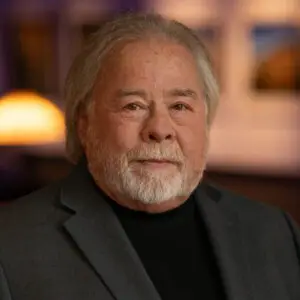
Ronald D. Reed
Founder and Director
Seven Generations Innovation
Writer and musician, and the founder of Seven Generations Innovation. His work explores democracy, ecological responsibility, public conscience, and the obligation to act with care for the generations still to come.
 0
2 Responses
Great Article!
Hello, Antonio – Thanks very much!